 Szlak Jelonków
Cieplice Śląskie-Zdrój – the spa quarter of Jelenia Góra
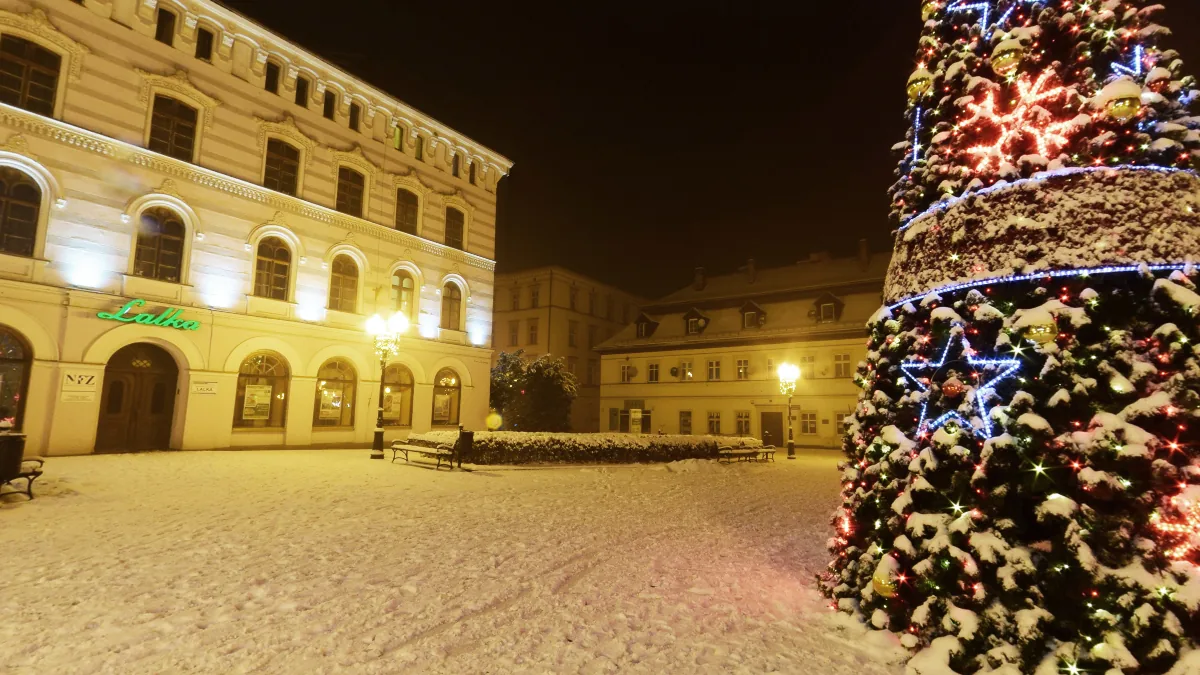
Cieplice Śląskie-Zdrój (German Bad Warmbrunn) is the spa quarter of Jelenia Góra and one of the oldest spa towns in Poland. The warmest thermal waters in the country rise here, and everything worth visiting grew up around them: the baroque Schaffgotsch palace, two parks, a museum in a former monastery, two historic churches and the thermal baths.
Hot springs – the warmest in Poland
The waters of Cieplice are thermal, weakly mineralised and fluoride-silicic, and their temperature reaches 86°C – the highest of any water in Poland. They gave the quarter its name: Polish “Cieplice”, German “Warmbrunn” and the medieval Clarus Fons all simply mean a warm or clear spring. How a duke is said to have discovered them while hunting is told in a separate legend.
Eight centuries of a spa
The first reliable mention comes from 1281, when Duke Bernard of Lwówek granted the land by the warm spring to the Knights Hospitaller of Strzegom. In 1403 a provostry of the Cistercians of Krzeszów was founded here and remained for four centuries. From the middle of the 14th century until 1945 the estate belonged to the Schaffgotsch family, who after the secularisation of 1810 also took over the spa itself. Cieplice was granted town rights only in 1935 and stayed an independent town until 2 July 1976, when it was incorporated into Jelenia Góra.
The Schaffgotsch palace
The largest building in the quarter stands on Piastowski Square: the Schaffgotsch palace, raised between 1784 and 1809 in a style shifting from baroque to Empire. Today it houses a branch of the Wrocław University of Science and Technology. It frames the square where most walks around the spa begin – and from which the Main Cieplice Walking Trail counts its kilometres.
Piastowski Square – a 360° panorama
Piastowski Square is the heart of the spa: the Schaffgotsch palace, the entrance to the Spa Park and a row of townhouses around it. Below you can look around it on a winter evening – it is a full circle, so turn the view any way you like.
Loading panorama… Two churches
The Catholic church of St John the Baptist was built in 1712–1714 as the church of the Cistercian provostry. Opposite, across the square, stands the Protestant church of 1774–1779 – a reminder of the days when visitors of both confessions came to take the waters.
The Natural History Museum in the monastery
The northern wing of the former monastery on Cieplicka Street houses the Natural History Museum, which has occupied the renovated building since 2013. Its collection grew out of the vast holdings of the Schaffgotsch family, gathered from the 16th century onwards – today some 30,000 insects, a thousand mounted birds, shells, minerals and fossils. The museum itself dates from 1954, when Cieplice was still a separate town.
The Spa Park and the Norwegian Park
The Spa Park was laid out as early as 1713, remodelled in 1796 and enlarged throughout the 19th century. It holds a pavilion from the late 18th century, a bandstand and the former promenade hall Kursaal of the mid-19th century, today the spa house “Edward”. Next to it stands the Spa Theatre of 1836, home to a puppet-animation theatre. Across the river lies the second park – the Norwegian Park of 1906, with the wooden Norwegian Pavilion of the same year.
Termy Cieplickie
The youngest attraction is Termy Cieplickie, opened on 24 March 2014 – pools of thermal water right beside the Spa Park. It is the simplest way to step literally into what Cieplice is famous for, and a good plan for a rainy day.
What else is in Cieplice
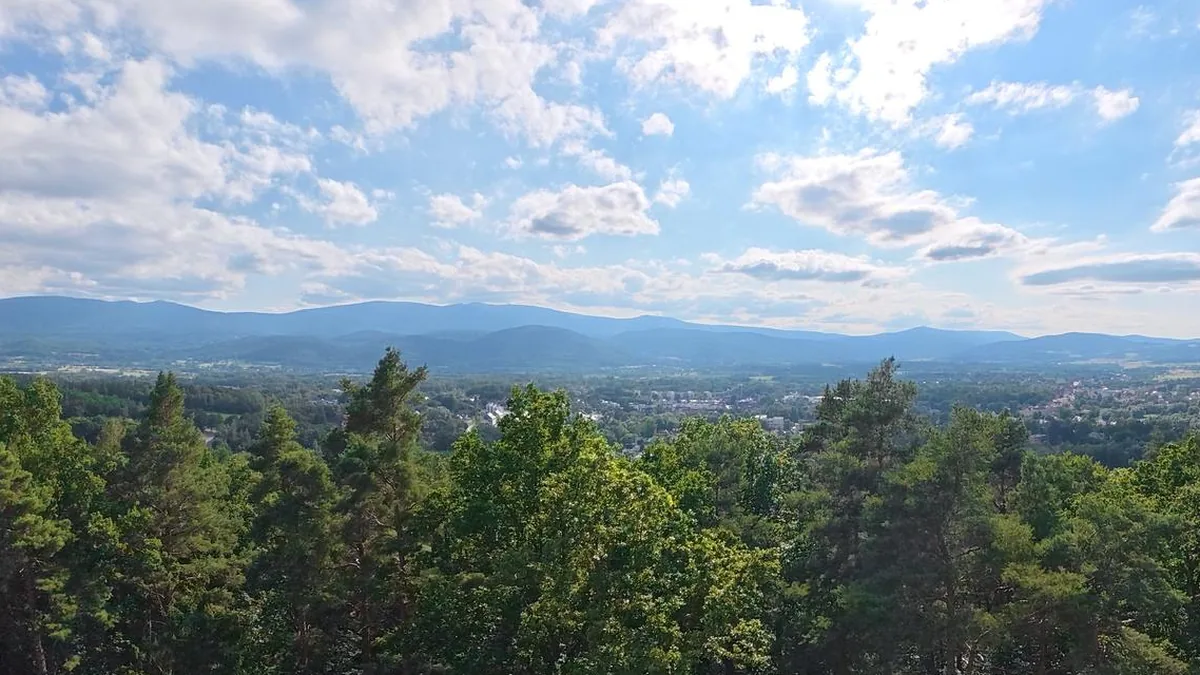
Above the quarter rises Sołtysia Hill with its lookout tower and a panorama of the Karkonosze. Around Cieplice runs the Main Cieplice Walking Trail – a 10.6 km loop through parks, hills and a former quarry. And three little deer of the trail stand in the quarter itself: Ciepliczanka i Zdrój, Lalkarz and Norwidek.
Frequently asked questions
What is worth seeing in Cieplice?
The Schaffgotsch palace on Piastowski Square (today a university branch), the Spa Park with its bandstand and the “Edward" spa house, the Norwegian Park with the Norwegian Pavilion, the churches of St John the Baptist and the Protestant church, the Natural History Museum in the former Cistercian monastery and the Termy Cieplickie thermal baths. A lookout tower stands above the quarter on Sołtysia Hill.
What was the German name of Cieplice?
Bad Warmbrunn. The Polish name Cieplice Śląskie Zdrój – today written with a hyphen, Cieplice Śląskie-Zdrój – was introduced in 1946, and a source of 1318 records the place as Cheplevode. All these names mean the same thing: a warm spring.
How warm are the thermal waters in Cieplice?
Up to 86 degrees Celsius – the highest water temperature in Poland. The waters are thermal, weakly mineralised and fluoride-silicic.
Since when has Cieplice been part of Jelenia Góra?
Since 2 July 1976. Before that it was an independent spa town, and earlier still a village belonging to the Schaffgotsch family.
How old is the spa at Cieplice?
The first reliable mention of the warm spring dates from 1281, so the spa is more than seven centuries old. Legend pushes the discovery further back, to 1175 and a hunt of Duke Bolesław the Tall.
